Corporate Culture
The Invisible Force Behind Business Success
5/12/20262 min read
Why a Positive Corporate Culture Is Essential for Business Success
In today’s business world, companies are no longer defined only by their products, services, or profits. One of the strongest indicators of long-term success is Corporate Culture.
Corporate culture is the shared values, behaviours, and environment that shape how people work together. It influences collaboration, trust, accountability, innovation, and ultimately business performance.
Strong Culture VS Poor Culture
A Strong culture is built when people work together and for one another.
Teams support each other, share knowledge openly, and work toward a common purpose. Employees feel valued, respected, and motivated not just by personal success, but by collective success. A positive workplace culture leads to:
a. Higher employee engagement
b. A better collaboration and teamwork
c. Stronger innovation and creativity
d. Improved retention and lower attrition
e. Greater adaptability and long-term growth
On the other hand, a poor culture develops when people work only for themselves and against each other. When internal competition replaces collaboration, trust begins to fade, and employees focus more on personal gain than shared success.
Over time, this creates low morale, poor communication, unhealthy workplace dynamics, and reduced overall productivity and the best people, the ones with options, start looking for somewhere that feels different.
The Power of Unwritten Rules
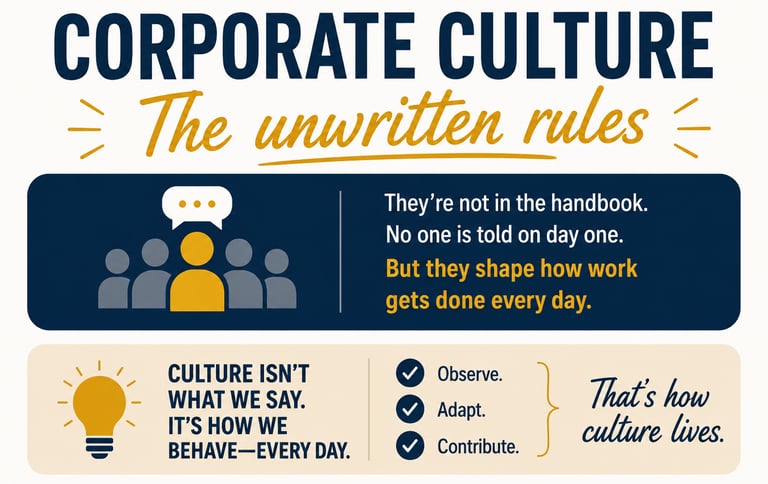
Employees observe leadership behaviours, team interactions, and everyday decisions more closely than company policies. If leaders promote transparency, collaboration, and accountability, those behaviours become part of the organisation’s identity. But if blame, favouritism, and unhealthy competition are tolerated, they become normalised too. Over time, these unwritten rules define the company's real identity more than any handbook ever could.
Change and Adapt
Every new joiner experiences this transition. Whether someone joins as a People Leader, SME, or Analyst, they often need to unlearn habits, approaches, and ways of working from their previous organisation and gradually adapt to the new environment.
As they observe the behaviours, communication styles, and unwritten expectations around them, they begin to align with the organisation's collective culture. That adjustment process — balancing past experiences with new workplace dynamics — is the unseen battle many professionals go through.
Culture always begins with leadership.
Leaders set the tone through their actions, communication, and decisions. Building a strong culture requires continuous effort — investing in people, encouraging open communication, recognising contributions, and creating an environment where employees genuinely want to succeed together.
Employee Satisfaction and Retention
People spend a significant part of their lives at work, and they want to feel supported and appreciated. A positive corporate culture increases employee satisfaction by creating an environment where individuals feel heard, respected, and empowered. Employees who feel connected to their workplace are more engaged, productive, and loyal to the organisation.
High employee turnover can be costly and disruptive. Companies with healthy cultures often experience lower attrition because employees are more likely to stay in workplaces where trust, collaboration, and growth opportunities exist.
Productivity, Innovation, and Growth
A supportive culture directly impacts organisational performance. Employees perform better when they feel motivated, appreciated, and encouraged to contribute ideas. Positive workplaces foster innovation because employees feel safe to share opinions, take initiative, and solve problems collaboratively.
Organisations that encourage teamwork and inclusivity are often more adaptable to change and better positioned for long-term growth. When employees work together with trust and shared purpose, businesses become stronger, more agile, and more resilient.
Conclusion
A positive corporate culture is one of the most powerful assets an organisation can have. It strengthens employee engagement, improves productivity, attracts top talent, and drives long-term business success. In a world where talent and innovation are key competitive advantages, organisations that prioritise people and workplace culture will always stand out.
Businesses do not grow only through strategies and technology — they grow through motivated people working together in an environment built on trust, respect, and shared purpose.