
Building Camaraderie
The Foundation of Strong Teams
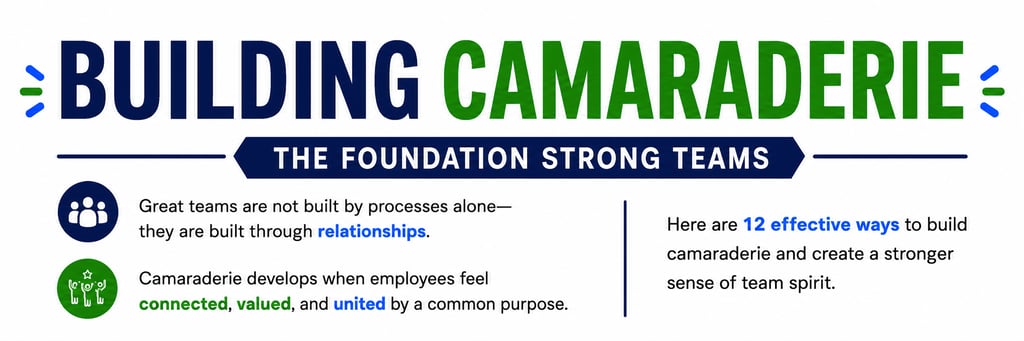
BUILDING CAMARADERIE
The Foundation of Strong Teams
Great teams are not built by processes alone—they are built through relationships.
Over the years, I have had the privilege of leading and hosting several team outings, engagement initiatives, and team-building activities. The impact was always evident. Team members who actively participated demonstrated greater collaboration, stronger interpersonal relationships, and a renewed sense of belonging.
What stood out most was the transformation before and after these activities. Individuals who were initially reserved became more engaged, communication barriers started to disappear, and the team developed a stronger sense of trust and oneness. The positive energy was evident—not only to the team but also to management, who observed improved morale and stronger team spirit.
When people genuinely connect, communication improves, collaboration becomes easier, and employees become more engaged and motivated.
At the end of the day, people may join organizations for opportunities, but they often stay because of the relationships they build along the way. A team that bonds performs better.
While team outings are a great way to strengthen bonds, there are many other ways organizations can foster team spirit and create meaningful workplace connections. Building camaraderie is not a one-time event—it is an ongoing investment in people. Organizations that create opportunities for employees to connect beyond their daily tasks cultivate trust, mutual respect, and a sense of belonging. These connections form the foundation for stronger collaboration, greater engagement, and better team performance.
12 Powerful Ways to Build Stronger Teams (Not limited to this list)
Team Outings & Offsites
Action: Step out, relax, and connect beyond work.
Outcome: Encourages stronger personal relationships and team bonding.
Celebrate Milestones
Action: Recognize wins, big or small.
Outcome: Makes employees feel valued and appreciated.
Cross-Functional Collaboration
Action: Work with different teams.
Outcome: Breaks down silos, improves understanding, and builds stronger partnerships.
Team Sports Activities
Action: Play together and stay active.
Outcome: Promotes teamwork, trust, and team spirit.
Volunteering Together
Action: Participate in community service as a team.
Outcome: Creates a shared purpose and strengthens bonds.
Coffee Chats & Informal Meetups
Action: Encourage casual conversations.
Outcome: Helps build authentic relationships and connections.
Learning Together
Action: Share knowledge and experiences.
Outcome: Fosters continuous growth and collaboration.
Recognition & Appreciation
Action: Acknowledge contributions regularly.
Outcome: Builds a culture of gratitude and motivation.
Mentorship & Buddy Programs
Action: Encourage guidance and peer support.
Outcome: Helps employees learn from and support one another.
Team Success Celebrations
Action: Celebrate achievements collectively.
Outcome: Reinforces unity and shared accomplishment.
Leadership Accessibility
Action: Promote open-door policies and transparent communication.
Outcome: Builds trust between employees and leaders.
Fun at Work
Action: Create opportunities for enjoyment and relaxation.
Outcome: Reduces stress and strengthens workplace relationships.
Conclusion:
In today's fast-paced work environment, fostering genuine human relationships is more important than ever. Whether through team outings, collaborative projects, recognition programs, mentoring, or informal interactions, every effort to bring people together contributes to a healthier and more productive workplace culture.
Because when individuals feel connected, they do not just work as a team—they succeed as one.